In our previous market structure guide, we covered how to mark Higher Highs, Higher Lows, and valid retracements. But what happens when the market stops trending and starts to flip?
Many beginner traders lose their accounts trying to “catch the top” or “guess the bottom” before there is any real evidence. The truth is that trend reversals are a process, not a single candle.
In this guide, we will break down CHOCH (Change of Character), BOS (Break of Structure), and how to use multi-timeframe analysis to catch high-probability trades without falling into traps.
Quick Recap: External vs. Internal Structure
Before looking for reversals, remember these fundamental rules:
- External Structure is Key: Always focus on the main Higher Highs (HH) and Higher Lows (HL) in an uptrend (or LL and LH in a downtrend).
- Ignore Internal Structure: The minor swings happening inside a major impulse wave are noise. Trading inside internal structure without context leads to unnecessary losses.
- Protected Levels:
- In an uptrend, the Higher Low (HL) is your protected level.
- In a downtrend, the Lower High (LH) is your protected level.
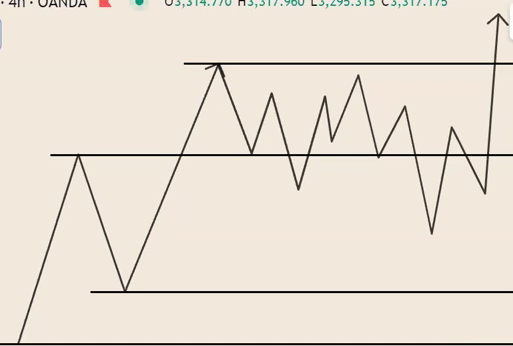
Deep Corrections and Liquidity Hunts
The market rarely moves in a straight line. Shallow pullbacks of 10%, 20%, or 50% are completely normal during a trend. However, the market will sometimes take a deep correction that almost retests the entire previous swing point.
Why do deep corrections happen?
Liquidity: As the market trends upward, traders place stop-losses below previous pullbacks. The market often pulls back deeply to hunt this liquidity (grab those orders) before continuing its main journey.
A deep correction on a lower timeframe might look like a full trend reversal, but on a higher timeframe, the primary trend remains completely intact. This is why multi-timeframe analysis is critical.
[INSERT IMAGE HERE: Deep Correction hunting liquidity before continuing the main trend]
What is CHOCH (Change of Character)?
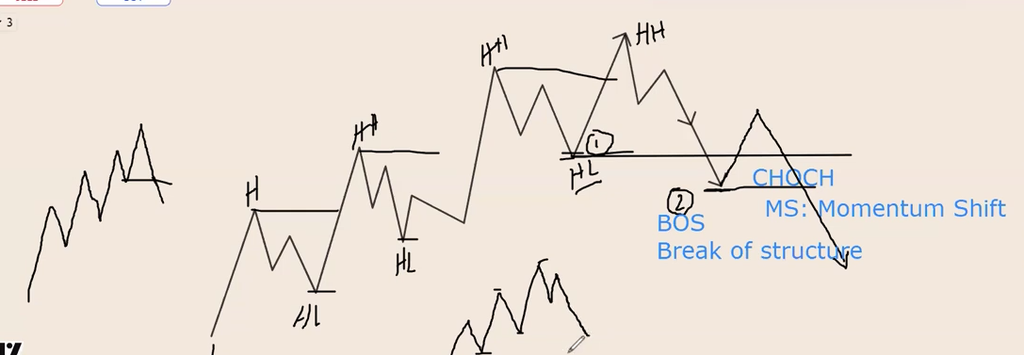
A CHOCH (also called a Momentum Shift or MS) occurs when price breaks the most recent protected swing point.
- In an Uptrend: When price breaks down below the latest confirmed Higher Low (HL), you have a CHOCH.
- In a Downtrend: When price breaks up above the latest confirmed Lower High (LH), you have a CHOCH.
The Warning: Simple CHOCH is Often a Trap!
A CHOCH is not a full confirmation that the trend has reversed—it is only your first clue.
If you take a trade immediately on a CHOCH, you will often get trapped. Price frequently breaks a Higher Low just to grab liquidity, only to immediately reverse and make a new Higher High.
What is BOS (Break of Structure)?
While CHOCH is the early warning sign, BOS (Break of Structure) is the confirmation.
A BOS happens when the market follow-throughs after the initial change of character:
- Price breaks the protected level (CHOCH).
- Price creates a new structure point (e.g., a new Lower Low).
- Price retraces.
- Price breaks that new structure point again.
Once you see a secondary break in the new direction, the new trend is officially confirmed by a Break of Structure.
Real-World Example: Using Higher Timeframe POIs for Low-Risk Entries
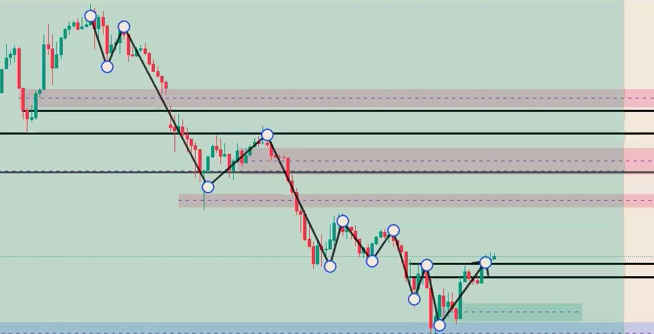
How do we trade this safely without guessing tops or bottoms? By combining a higher timeframe (HTF) trend with a lower timeframe (LTF) entry!
Rule: “Trend is your friend.” Always align your trades with the higher timeframe direction.
The Multi-Timeframe Strategy:
- 4-Hour (H4) Chart: Identify the main bullish trend. Price begins a deep correction back down toward a key Point of Interest (POI)—like a strong support zone or order block.
- 15-Minute (M15) Chart: As price falls toward your H4 POI, the 15-minute internal structure will look bearish (making lower highs and lower lows).
- The Entry: Once price reaches your H4 POI, wait for a Momentum Shift / CHOCH on the 15-minute chart.
- Because price is reacting to a strong HTF support zone, a simple 15-minute CHOCH is often all the confirmation you need to enter a long position with tight risk management!
Final Thoughts
- Don’t predict, react: Stop trying to pick tops and bottoms without market evidence.
- Treat CHOCH as an alert: Use CHOCH as a heads-up that momentum is shifting, but wait for context or a BOS for full confirmation.
- Use multiple timeframes: Let the higher timeframe give you the direction (and POI), and use the lower timeframe to spot the Momentum Shift for your entry.